Seoul Ferry Terminal
A ribbon twisting upon itself to generate a 360° route over the Han River. The Seoul Ferry Terminal proposes a new urban axis that connects the city with the water and transforms the riverbank into a destination.

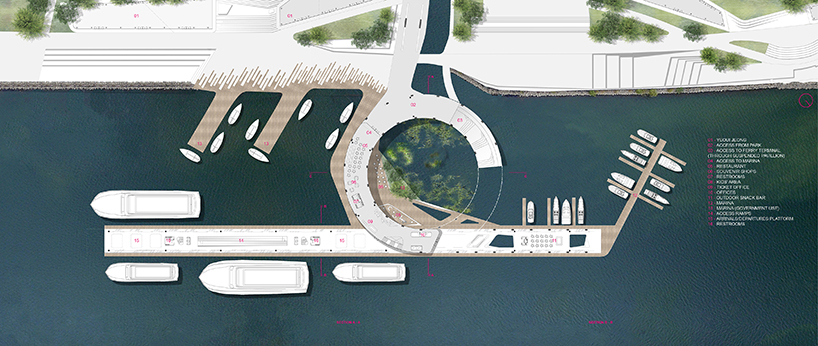
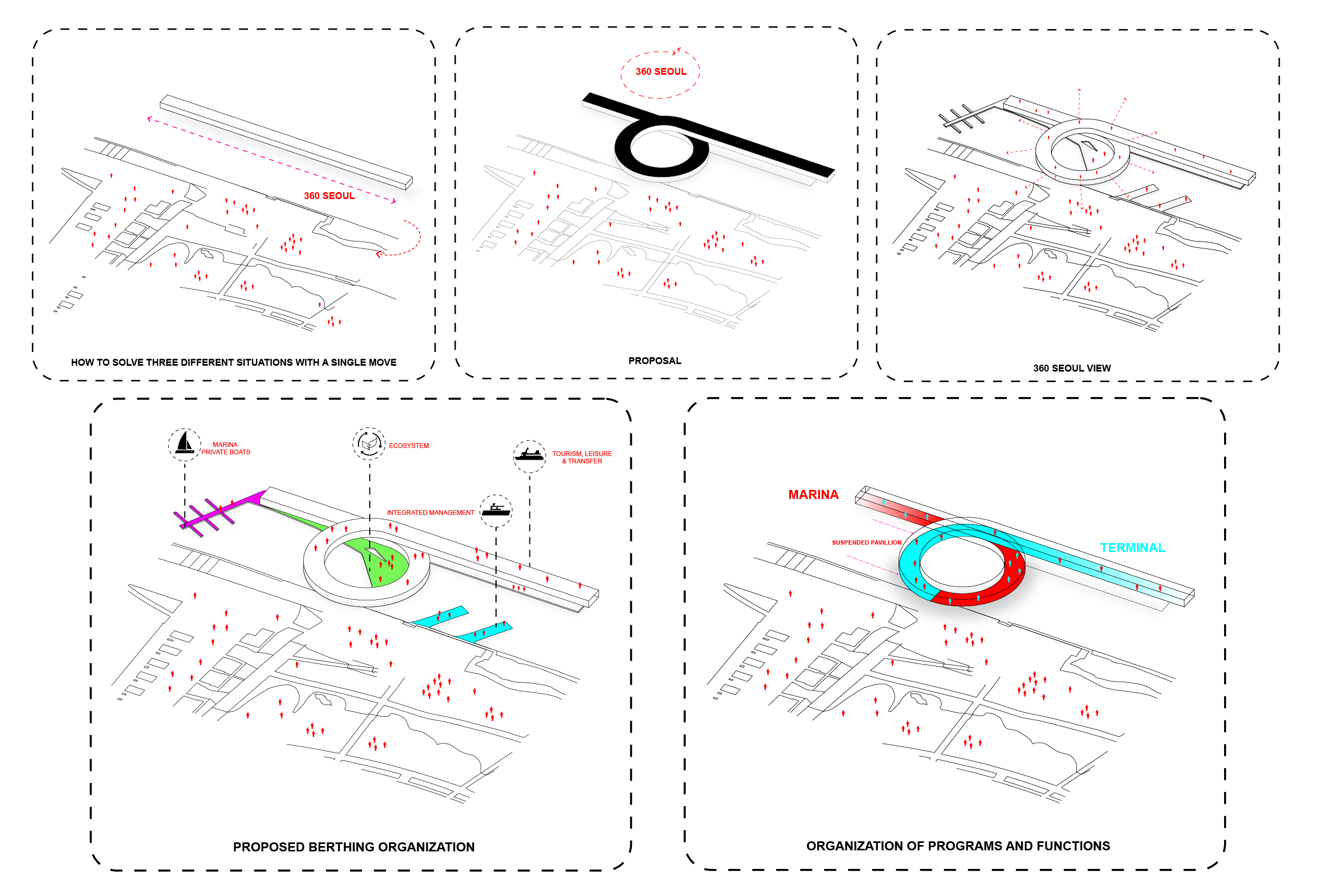
The project emerges from a precise operation: twisting the available length of the site to create, between the terminal and the marinas, a contained and active central space. That torsion is not merely formal — it is the gesture that turns an infrastructural program into an urban experience.
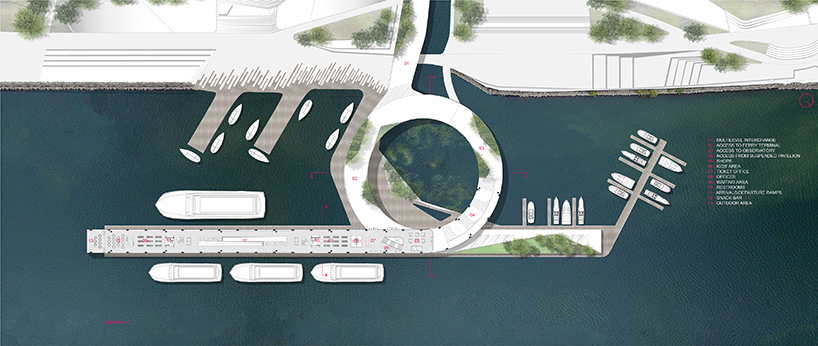
The proposal takes the form of a continuous ribbon that closes into a loop. The route progressively unfolds views of the surroundings, culminating in a rooftop viewpoint that embraces a full 360° of the riverscape. The section fluctuates according to use, alternating mixed program, adaptable zones, and reception spaces that respond to the variable rhythms of port activity.
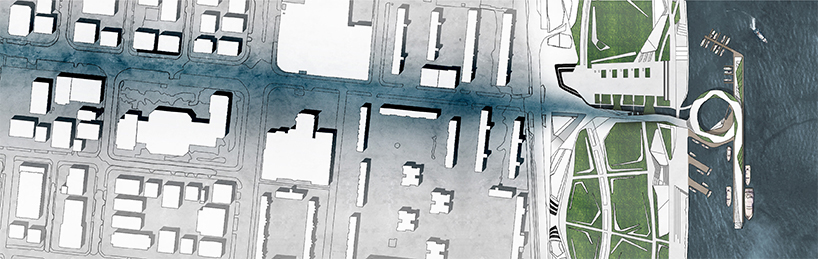
The terminal articulates the existing urban fabric with the waterfront through a new circulatory axis that redefines the site's identity. The riverbank ceases to be a boundary and becomes an active threshold between the city and the river.
The berth layout organizes vessels according to scale and operational needs: the largest — tourist and transfer boats — occupy the outer perimeter, where maneuvering space is greatest and access most direct.




No items found.
No items found.